
On Caring for Small Things (And Why It Matters)

Updated: Feb 4
There's this moment every morning when I hear them before I see them: the (not always) soft wheeks and rustling of hay. My guinea pigs know the sound of my footsteps, and they're already making their breakfast demands before I've even had my coffee.
It's not glamorous work, this daily tending. Checking water bottles, refilling hay racks, and cleaning corners where someone decided the litter box was more of a suggestion than a rule. But somewhere between the morning vegetable deliveries and evening cage cleaning, I've discovered something unexpected: caring for small, vulnerable things has become the most grounding part of my creative practice.
The Ritual of Showing Up
Guinea pig care found me during the most ordinary errand: I popped into the pet store for fish food. I paused by the small animals display—two ridiculously cute potatoes sharing a pile of hay—when an employee mentioned that someone had abandoned a guinea pig in a cage outside the store six weeks earlier. They couldn’t sell it, no employees could adopt, and they didn’t even know the sex. “Want to see it?” they asked.
In the bright back office, I found a scared little creature buried deep in paper bedding, trying to disappear. The store was running out of options. I wasn’t planning on another pet, and I knew nothing about guinea pigs. But I couldn’t leave her there. The store offered a free adoption. I left with a basic cage, grabbed hay and bedding, and headed home. I set up water and food and let her settle in. The next day, I went to a vet. It turned out 'it' was a she in decent health. My daughter named her Suki.
A few nights of research later, I learned Suki needed more space and, ideally, a companion (guinea pigs are herd animals; five-plus is their idea of “normal”). I tried for months to adopt a buddy with no luck. Then an animal rescue emergency message was posted on FB: someone was hoarding 57 guinea pigs, and they all needed placement immediately. I chose one, then learned she was bonded to two other females—sisters, maybe. I couldn’t bear to separate them. Overnight, I went from one guinea pig to four. Hello Rae, Bebe, and Blondie!
More mouths meant more hay and a bigger footprint. The cleaning is the hard part (physically and financially). Vet costs are no joke either, since they have to be seen by an exotic vet, not a regular one. But I love these munchkins. No regrets. The experience has given me a new perspective on the steady, unsung labor of guinea pig rescue volunteers. I’m committed to my little herd and to helping the people doing all they can for these small lives.
Funny thing: that’s when the ritual really started, showing up every day, whether or not I felt ready.
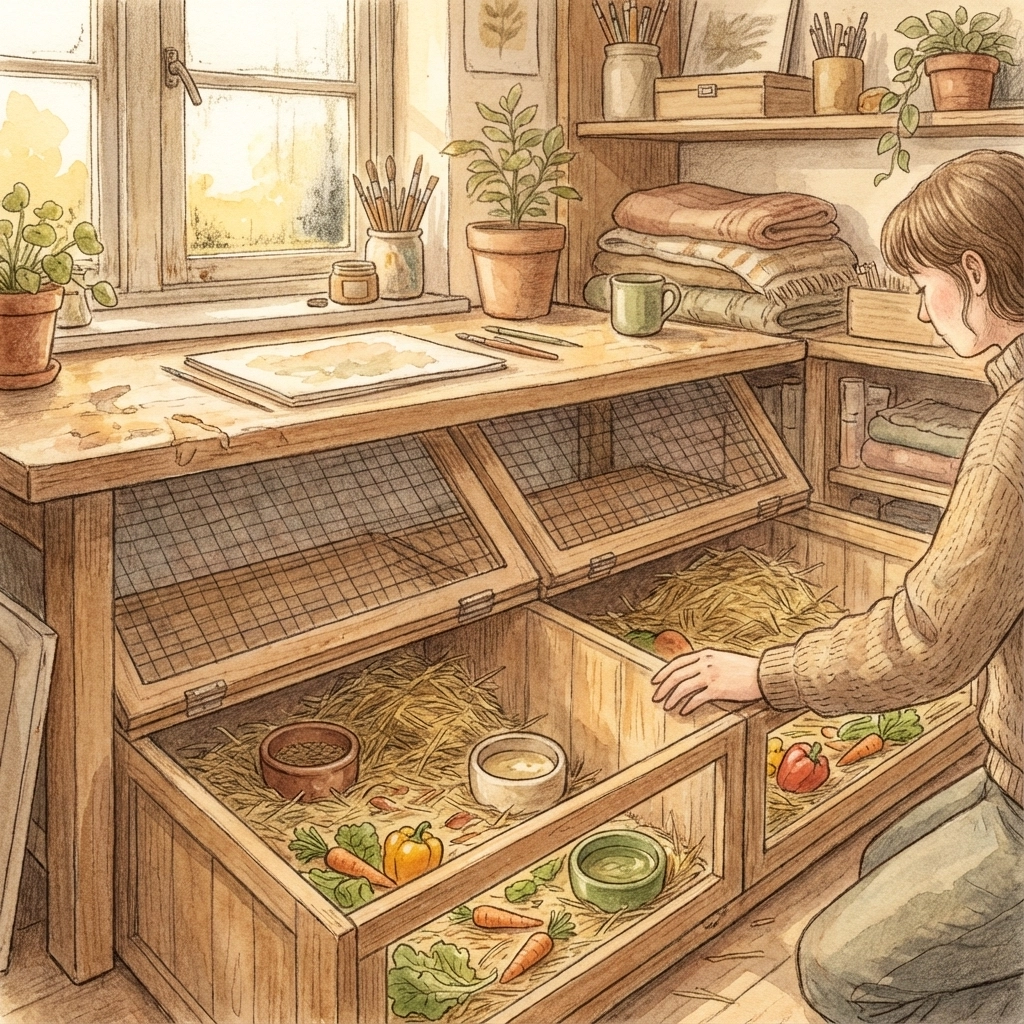
What struck me first wasn't the cuteness factor (though let's be honest, those little potato-shaped bodies are pretty irresistible). It was the routine they demanded. Unlike humans, who can skip meals, sleep in, or generally mess with their schedules, guinea pigs need consistency. They need fresh water daily, hay twice a day, and vegetables chopped to the right size at the right time. They need their space cleaned regularly, their nails trimmed, and their health monitored. In other words, they need you to show up. Every single day. No exceptions, no "I'll do it later," no creative excuses about being too inspired to handle mundane tasks. And here's the thing about showing up that I didn't expect: it's exactly what my art needed too.
What Small Creatures Teach About Attention
Before the guinea pigs, I used to think creativity was about waiting for lightning strikes of inspiration. I'd work in bursts: manic periods of productivity followed by stretches where I'd stare at blank surfaces, wondering if I'd forgotten how to make anything meaningful. But watching a guinea pig navigate their world changed something in how I see attention itself. They notice everything: the smallest shift in routine, the specific crinkle of the vegetable bag, the difference between "I'm just walking by" footsteps and "I'm coming to feed you" footsteps. They exist entirely in the present moment, responding to what's actually happening rather than worrying about what might happen next. There's something profound about witnessing that level of presence. When I'm cleaning their space, checking on a guinea pig who seems a little off, or just sitting quietly watching them explore, I'm forced into that same kind of attention. I can't multitask my way through caring for them. I have to be there, really there, noticing the small signs that indicate health or happiness or distress. This quality of attention: specific, immediate, focused on what's actually in front of you, turned out to be exactly what my art was missing.
The Connection Between Caring and Creating
Both art and animal care require what I've started thinking of as "tender vigilance." It's the same mindset that makes you notice when a guinea pig's eating habits change slightly, that also makes you see when a color isn't quite right in a design, or when the balance of a composition feels off by just a degree.
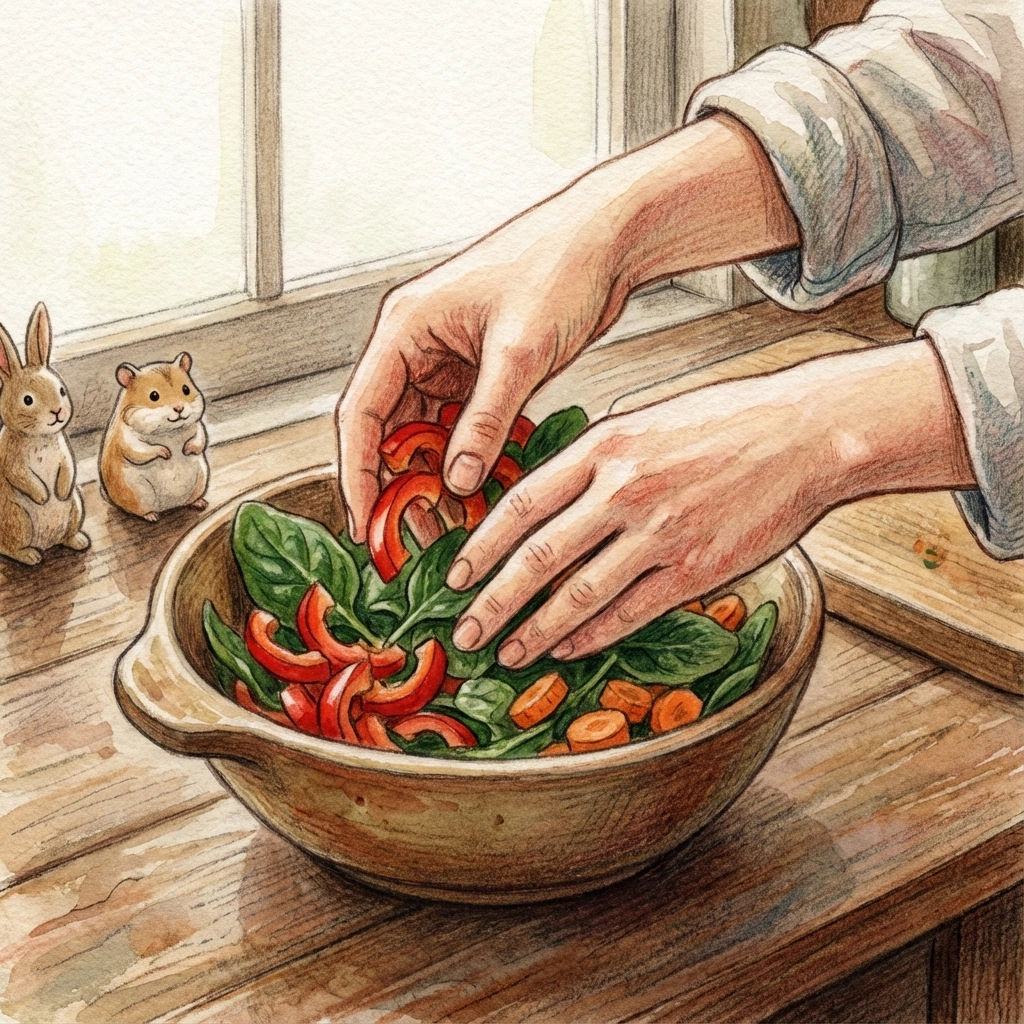
It's about developing an eye for the subtle. In my studio, I'll catch myself using the same careful attention I learned from animal care: checking that the proportions feel right, that the elements are working together, that nothing is being neglected or overlooked. Both practices demand that you show up consistently, that you pay attention to details others might miss, and that you respond to needs rather than imposing your own agenda.
There's also something about working with vulnerable creatures that strips away any pretense about your work being about you. Guinea pigs don't care if you're having an artistic crisis or if your latest design isn't groundbreaking. They need what they need, when they need it. This has been incredibly freeing for my creative practice; it's reminded me that art doesn't always have to be profound or revolutionary to be meaningful. Sometimes it just has to be made with care, with attention, with the understanding that someone (or some small creature) might need exactly what you're offering.
The Philosophy of Small Acts
The research backs up what I've experienced firsthand: small, consistent actions create more lasting impact than occasional grand gestures. When The Gottman Institute talks about how regular small acts of kindness transform relationships more than elaborate surprises, I think about how the daily routine of animal care has transformed not just my relationship with these creatures, but with my creative work itself.
Every morning when I measure out pellets and wash water bottles, I'm practicing something that our culture doesn't always value: the art of maintenance. Not building something new, not achieving something impressive, just maintaining what already exists so it can continue to thrive.
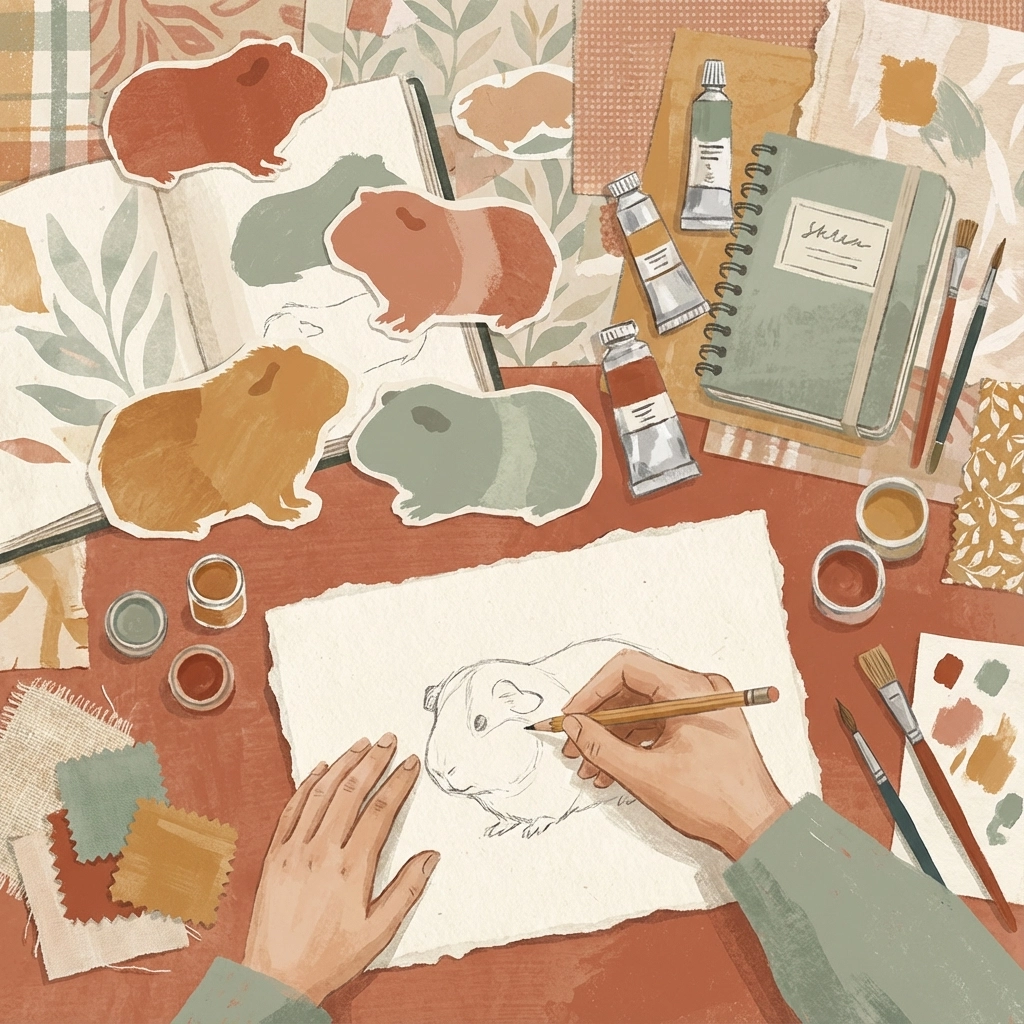
This has shifted how I think about my creative practice too. Instead of constantly pushing for the next big project or breakthrough, I've started valuing the maintenance work: updating older designs that deserve refreshing, tending to the systems that keep my studio running, and maintaining relationships with the people who support my work. It turns out that creative sustainability looks a lot like guinea pig care: consistent, daily attention to small needs that add up to something stable and thriving.
Finding Ground in Groundedness
One unexpected gift of caring for small animals has been how it anchors me to the physical world. When I'm struggling with a design that feels too conceptual or overthought, I can step away from the design table, sit with the guinea pigs, and remember what it feels like to work with my hands in service of something immediate and real. There's something about their pure physicality, the way they experience joy through their whole bodies when the vegetable bag crinkles, the way they express contentment by stretching out completely flat in a sunny spot that reminds me why I started making things in the first place. Not to prove something or build a brand or achieve some abstract goal, but to create objects that might bring that same kind of simple, embodied pleasure to someone's day.
The research on mindfulness confirms what I've learned through guinea pig watching: paying attention to small details, the taste of food, the feel of sunlight, helps you become more present and appreciate everyday joys. When I watch a guinea pig systematically work through a piece of bell pepper, savoring each bite with complete focus, I'm reminded to bring that same quality of attention to my own daily experiences.
The Cumulative Power of Small Things
What I've discovered through 18 months of daily guinea pig care is that life is fundamentally made up of small moments and interactions. The grand gestures and big achievements get the attention, but it's the accumulation of tiny acts of care that actually creates the foundation for everything else.
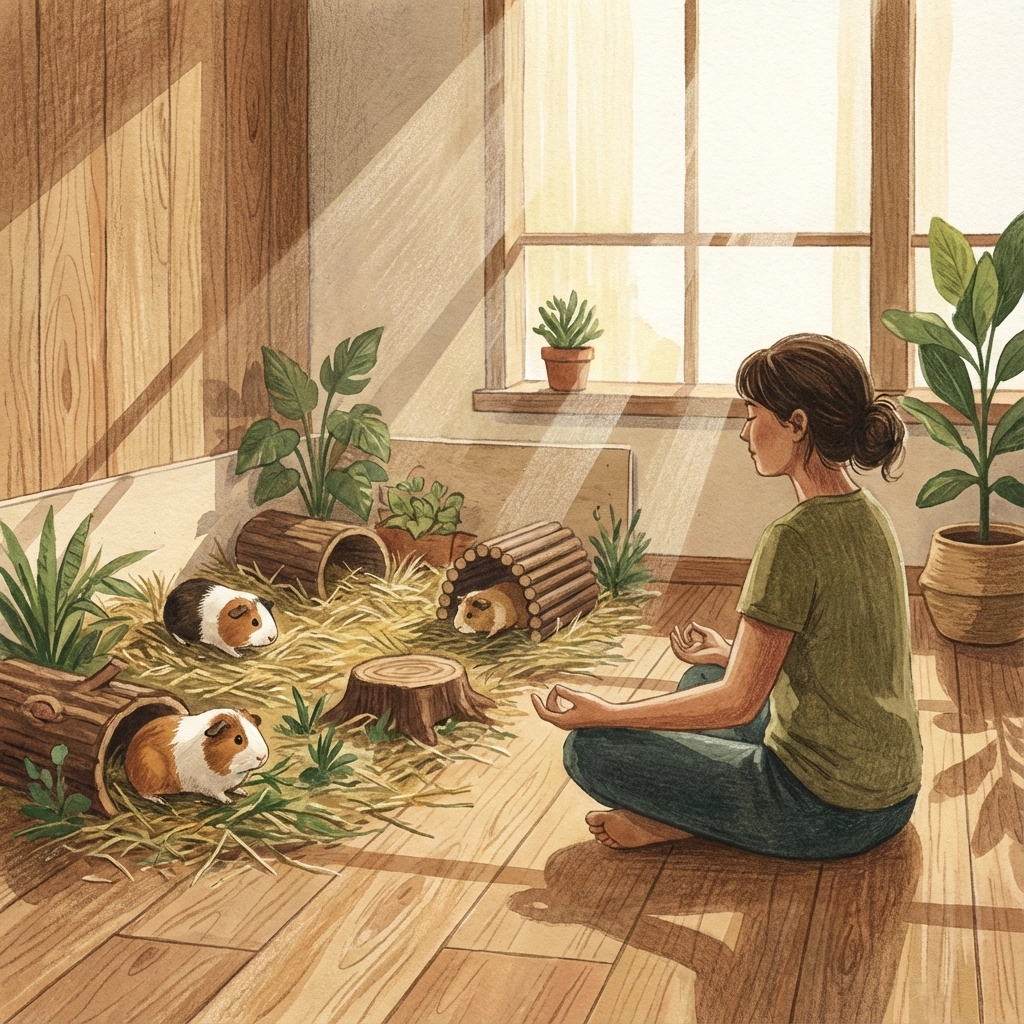
In my studio practice, this means trusting that small improvements compound over time. The daily habit of sketching, even when nothing brilliant emerges. The practice of mixing colors until they're exactly right, even for a piece that will never be famous. The routine maintenance of tools and workspace makes it possible to create when inspiration does strike.
As one philosopher noted, "The creation of a thousand forests is in one acorn." Every morning when I refill water bottles and distribute timothy hay, I'm participating in that same patient process of growth through accumulation. The guinea pigs don't become healthier or happier through dramatic interventions: they thrive through the steady provision of what they need, day after day.
This has revolutionized how I think about creative work. Instead of waiting for lightning strikes of genius, I've learned to trust the process of showing up regularly, paying attention consistently, and responding to the small needs of both my art and the creatures in my care.
The Art of Tending
Ultimately, caring for small things: whether guinea pigs or preliminary sketches, whether delicate creatures or delicate creative ideas, is about developing a capacity for tenderness that extends beyond yourself. It's about learning to see value in things that don't demand attention, that can't advocate for themselves, that require you to notice subtle signs and respond with patience.
In a world that often rewards dramatic gestures and immediate results, there's something revolutionary about committing to the quiet work of daily care. It's taught me that attention itself can be a form of love, that consistency can be more transformative than intensity, and that some of the most meaningful work happens in the small, unremarkable moments that no one else will ever see.
Every morning when I hear those wheeks greeting me, I'm reminded that showing up, really showing up, with presence and care, might be the most important creative practice of all.